By Troy Reeves
A new MP sat down in the House of Commons, looked across the chamber and said, "There they are — the enemy." He was soon corrected by an older colleague: "No, that's just the Opposition. The enemy are behind you" — meaning his own party members.
Early in our friendship, Duncan pointed out that I — being in the other party — was one of the few people he could let his guard down around, since the internecine warfare of Labor factions was of no use to me as a member of the Liberals. It was just something to give me a chuckle, and occasionally the chance to offer some advice.
Duncan and I met in student politics at Griffith University — something I originally had no interest in getting involved in, given it seemed to be peopled by aggressive radicals who were highly intolerant of other people. Screaming "you're a bunch of white heterosexual f*cks" at a group of residential students who attended the SRC AGM was the end of their 20-year reign at the SRC.
But when the SRC started interfering with the running of the Colleges and imposing their radical ideas on a bunch of country and international kids, Duncan convinced me to get involved. Over the period of a year, we (well, mostly Duncan) put together a coalition of all the people opposed to the existing regime: the Labor Club, the Liberal Club, various international students' clubs, and people who never normally vote, like the engineers. During that year I observed Duncan's quite amazing skills in elections and in getting people to work together. Ultimately we won, with Duncan as President, having removed a 20-year junta that represented nobody. To my disappointment, I graduated around that time and was not around to see the three-year reign of that group. On my odd visits back, though, the campus looked sparkling new. All the politics posters gone, all the graffiti on the concrete gone, and all the radicals trying to sell socialist magazines, or otherwise just abuse the "normies", gone.
It was some years before Duncan and I caught up again. I had gone to the country to start my career and he was working as a solicitor in Brisbane and climbing the greasy pole of the Labor Party. By the time we caught up again, many of our friends had moved away or were spending their Saturday nights home with their partners. We began to have many adventures together. While Duncan was from Rockhampton and I was from Toowoomba — which made us incredibly similar despite our different political allegiances — Duncan was far more intrepid than me. It's highly unlikely I would have travelled to Las Vegas several times without him. In fact, it was on our first trip there that we ended up running his 2012 pre-selection from our room on The Strip. Neither of us had bought a US SIM for our phones, but I had brought my laptop. When Duncan borrowed my laptop one day, he checked his email, which was full of subject lines reading "Where are you??" While we were blissfully uncontactable by phone, the Labor Party had brought on their pre-selections. While Duncan booked the first plane back, he also had to make it look like he was in Brisbane and campaigning. Hence my laptop became a tool in Duncan's pre-selection as he countered enemy comments against him, and generally posted everywhere to look like he was in Brisbane. That day we coined the phrase "that's one for the memoirs" — a collection of amusing events that could only be released one day, after Duncan had retired from being Premier.
Duncan didn't win the 2012 election — the Campbell Newman landslide took even the safest seats away from Labor. Duncan took a job as a union representative, which involved a lot of driving, so it wasn't unusual for him to call me most days from the car, and we'd talk about politics, sport, and a million other things. We could both have a civilised debate without getting emotional, and Duncan was incredibly smart. He had achieved close to the top of the Queensland high school exit scores — a 3, when the best was 1. When not overseas, we could be found watching a State of Origin match in Sydney after going to the Bradman Museum in Bowral, or at a favourite — the Hilton at the Gold Coast. Duncan was finally elected as the Member for Stretton in 2015. I was up in Brisbane from my then job in Canberra to spray champagne over him, just as we had 15 years earlier when he won the SRC Presidency.
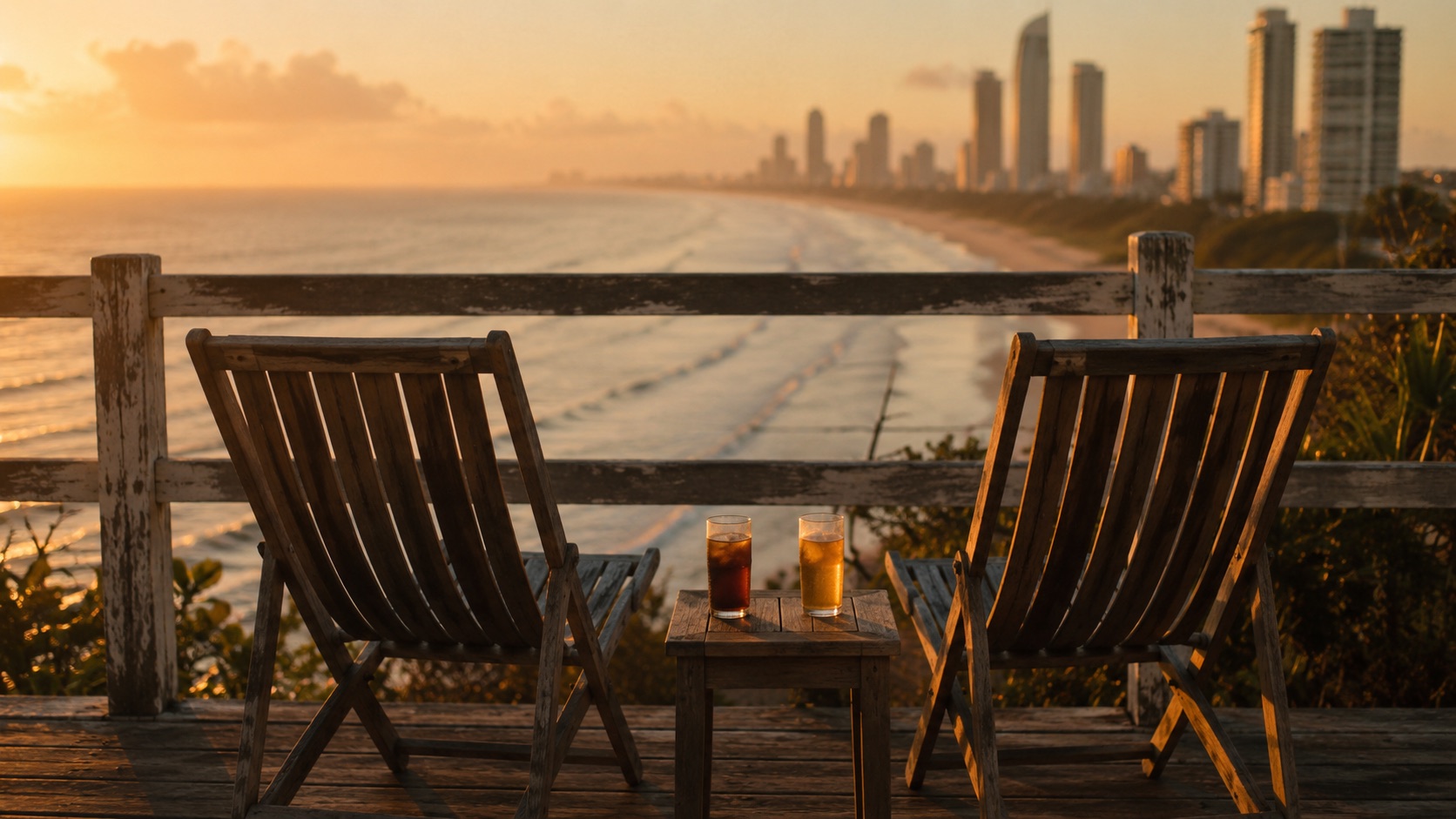
Without entering into the internecine Labor factions, Duncan was the wrong gender and the wrong faction to ever expect a promotion to Minister. On one of our getaways to the Gold Coast, Duncan told me he'd split up with his long-term girlfriend — unfortunately something the huge time involvement of politics often causes. He said if he wasn't a Minister by 45, he was buying a place on the Gold Coast, where he would be a lawyer half the day, and surf and enjoy himself the other half. He asked me if I would be in it. I agreed, and that became our mutual goal.
Unfortunately he wouldn't make it to 45. In mid-2019, Duncan convinced me to go to Las Vegas yet again. While Duncan played the tables, I took the chance to see the Grand Canyon and to kayak the rapids in Colorado.
Upon coming home, I caught up with Duncan twice in two weeks. Both times he declined a beer on account of feeling sick. This was the man who kept XXXX and Bundy in business. Something was wrong. A sore shoulder took him to the doctor, where he discovered he was the victim of the scourge of our age group — cancer, in multiple organs, at age 39, with no previous signs. With no thought of resigning, Duncan carried on as an MP — attending everything in his electorate, and making speeches in the House. As usual, Duncan's ability to make absolutely anything fun came to the fore. Although COVID restricted a lot of things, Duncan still went to Sydney to meet his hero Paul Keating, took a stretched limo to the Gold Coast and then a helicopter over Sea World, and packed his 40th birthday party at his favourite Indian restaurant.
The last few weeks of his life I like to call "the Festival of Duncan". No one ever had a better send-off. It started with the Community Farewell: over 1,000 people at QEII Stadium — the site of the 1982 Commonwealth Games — and Labor Party life membership from the Premier. Duncan delivered his final speech at Parliament, followed by a reception attended by all his colleagues, including the Premier. Then there was the rare accolade of a reception at Government House, hosted by Governor Paul de Jersey, who as Chief Justice had conferred Duncan's law degree on him.
The last night
A secret a politician like Duncan could never let slip was that he barracked for NSW in the State of Origin. Enough to lose you your electorate in Queensland. Due to COVID, for the first time State of Origin was being held in Townsville, not a capital. Townsville was Duncan's birthplace, and he had been telling everyone NSW would win. No one believed him. NSW defeated Queensland 50-6 that night. Duncan slipped away later that night, and we will never be sure if he knew his team had humiliated Queensland in the town of his birth, that most northern of cities. But we hope he did.
The funeral took the Gabba to hold it. Former Prime Minister Kevin Rudd spoke, as did Premier Annastacia Palaszczuk. There were sports stars from the Australian cricket team, the Brisbane Broncos and many others. To those who knew him well, Duncan was still giving us a laugh after death. Another of his sporting secrets was that he really didn't like the Brisbane Broncos. As various sports representatives put their team flags on his coffin, those of us in the know were astounded to see the Broncos flag there. However, three times during the rest of the funeral, it slipped off the coffin. Duncan, kicking from the inside. But the last laugh was still to come. Duncan was known to spend as little time as possible at cultural institutions — 30 minutes for the Louvre. Rocky boy that he was, he would rather be watching the cricket with a rum and coke. So it was with suppressed laughter that his friends heard that the state school in his electorate was naming its new building the Duncan Pegg Performing Arts Centre.
He was a great loss to politics, to Queensland, and most of all to his family and friends, who loved this highly unique man.